
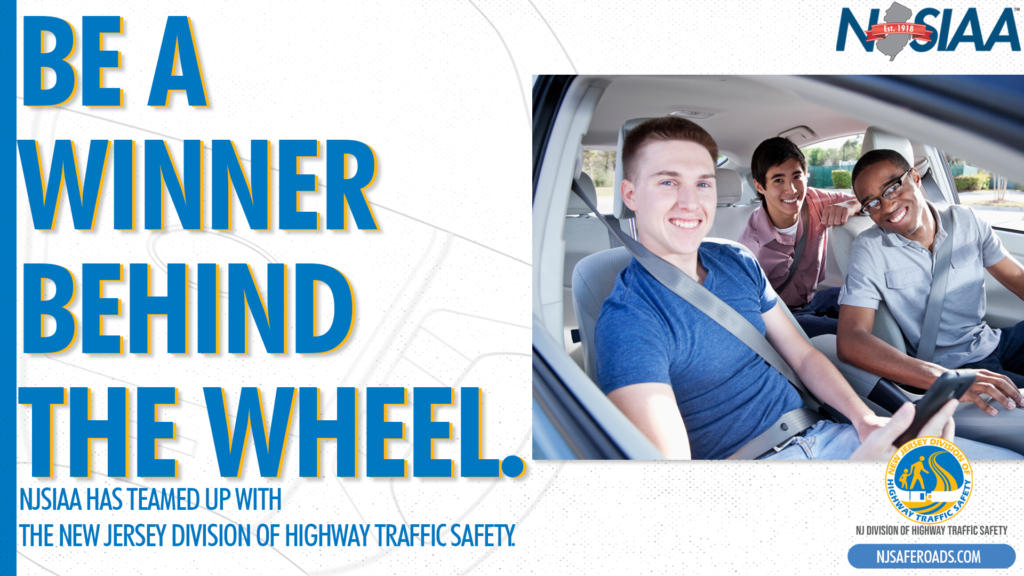
The NJSIAA has partnered with the New Jersey Division of Highway Traffic Safety to share safe‑driving messages with teens, their families, and their communities. Teens and young drivers are at higher risk of being involved in motor vehicle crashes due to limited driving experience, ongoing cognitive development, peer pressure, and risk‑taking tendencies.
Sports teach student‑athletes discipline, skill development, and the value of practice — all of which translate to responsible behavior behind the wheel. Integrating safe‑driving education into athletic programs is an effective way to engage teens and help establish lifelong safe driving habits. Parents and teens can learn more about keeping young drivers safe at NHTSA | Teen Safe Driving and NJDHTS | Teen Driver Safety - New Jersey Office of Attorney General.
The Division of Highway Traffic Safety is committed to preventing crashes involving young people in New Jersey and has identified six key focus areas for teen driver safety. This campaign highlights the following:
Drug and Alcohol Impaired Driving
Drugs and alcohol impair reaction time, judgment, and motor skills. Teens are at higher risk than adults for being involved in impaired‑driving crashes. According to NHTSA, 22% of teen drivers involved in fatal crashes in 2024 had been drinking. Younger drivers in New Jersey are also more likely to be involved in fatal crashes linked to drug impairment.
- NJDHTS | Impaired Driving - New Jersey Office of Attorney General
- Driving While Intoxicated in New Jersey
Graduated Drivers License: Stick to It!
New Jersey has had a winning streak with the Graduated Driver License (GDL) Law. These laws have proven to be effective in reducing teen driving fatalities in the state so we’re asking NJ teens and families to continue following all elements of the GDL law, including passenger limits and restrictions on driving at night.
GDL laws are recognized as the single most effective tool for keeping young drivers safe and reducing teen driver crashes, injuries, and deaths. New Jersey has some of the most effective teen driving laws in the country including the GDL, Kyleigh’s Law, and as of 2025, a new requirement of 50 practice hours for permit holders.
- NJDHTS | Teen Driver Safety - New Jersey Office of Attorney General
- Understanding New Jersey's Graduated Driver License Program
Dangers of Speeding
Speed may be ideal for sports, but not for the road. In 2024, speeding was a factor in 33% of the teen driver-involved in fatal crashes. Teens are more likely to speed and take risks, but speeding reduces reaction time, which is especially dangerous for new and inexperienced drivers.
Faster speeds increase crash severity. The faster you travel, the less time you have to react, and the greater the force of impact if a crash occurs. Slowing down gives you more time to respond and reduces the chances of making errors that could result in a serious crash.
Risk of Distracted Driving
Focus matters both on the field and behind the wheel. Any distraction can prevent a driver from getting home safely. Young drivers are more likely to drive distracted and to be involved in fatal crashes caused by distraction. Taking your eyes, hands, or mind off the road for even one second increases the risk of a crash.
Using a phone’s “Do Not Disturb” feature is an easy way to avoid temptation and stay focused.
- NHTSA | Distracted Driving Dangers and Statistics
- Take a Break from your Phone!
- Distracted Driving in New Jersey
Seat Belt Safety:
Helmets, shin guards, and mouth guards protect athletes on the field — seat belts protect drivers and passengers. Buckling up cuts the risk of fatal injury in half, yet seat belt use remains lowest among teens. More than half of passengers killed in cars driven by teen drivers in recent years weren’t buckled up.
Pedestrian Safety:
Drivers and pedestrians are on the same team. In New Jersey, pedestrians account for 30% of all roadway fatalities. As teens learn to drive, they must understand how to safely share the road — by giving pedestrians at least four feet of space when passing, stopping at crosswalks, slowing down, and staying focused.
NJSIAA Social Channels
- Facebook: facebook.com/NJSIAA
- X: @njsiaa
- Instagram: @NJSIAA1918
New Jersey Division of Highway Traffic Safety Social Channels
- Facebook: facebook.com/NewJerseyDivisionofHighwayTrafficSafety
- X: @NJTrafficSafety
- Instagram: @NJTrafficSafety
